

Lower back pain can affect almost every part of daily life. Sitting at a desk, getting out of bed, walking, exercising, lifting groceries, driving, or even finding a comfortable sleeping position can become difficult when the lumbar spine is painful.
The lumbar spine, commonly called the lower back, carries a significant amount of the body’s weight while also allowing bending, twisting, and other movements. Because of the demands placed on this area, the lumbar spine can be affected by injuries, age-related changes, disc problems, nerve compression, and other spinal conditions.
For some people, lower back pain is temporary and improves with conservative care. For others, persistent pain may indicate an underlying lumbar spine problem that needs medical evaluation.
Understanding the possible cause of your symptoms is an important first step toward finding appropriate treatment. Below, we explore seven common causes of lower back pain, the symptoms they may produce, and when you should consider seeing a spine specialist.
Understanding the Lumbar Spine
The lumbar spine is the lower section of the spinal column. It consists of five vertebrae, labeled L1 through L5, located between the thoracic spine and the sacrum.
Between these vertebrae are intervertebral discs that act as cushions and help absorb forces generated during everyday movement. The lumbar region also contains joints, ligaments, muscles, and nerves that work together to provide stability and mobility.
When one of these structures becomes injured, compressed, irritated, or affected by degeneration, lower back pain can develop.
Symptoms do not always remain confined to the back. Depending on the underlying condition, a patient may experience pain, numbness, tingling, or weakness extending into the buttocks, hips, thighs, legs, or feet.
- Lumbar Herniated Disc
A herniated disc is a common lumbar spine condition that can cause both lower back and leg symptoms.
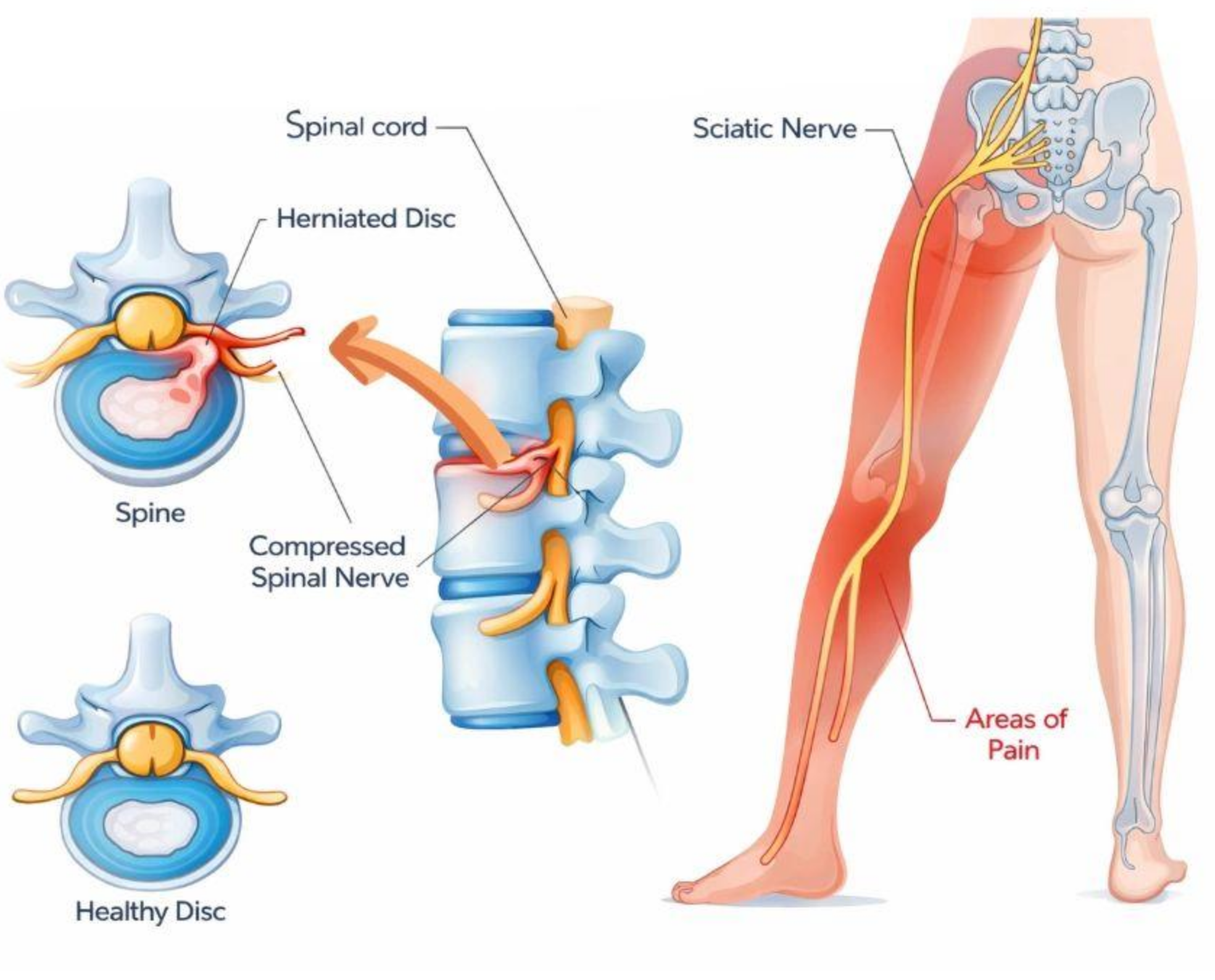
Spinal discs contain a softer inner material surrounded by a tougher outer layer. If the outer portion of a disc becomes damaged or weakened, some of the inner material can push outward. This is commonly referred to as a herniated or slipped disc.
A herniated lumbar disc does not always cause symptoms. However, when the disc material irritates or compresses a nearby nerve, pain and neurological symptoms can develop.
Patients may experience:
- Lower back pain
- Pain extending into the buttock or leg
- Tingling or numbness
- Burning or electric-like sensations
- Muscle weakness
- Pain that becomes worse with certain movements
When a lumbar disc affects the sciatic nerve roots, it may produce symptoms commonly associated with sciatica.
Treatment depends on the severity of the symptoms and the degree of nerve involvement. Many patients improve without surgery, while persistent neurological symptoms may require further evaluation.
- Lumbar Spinal Stenosis
Lumbar spinal stenosis occurs when the space available for nerves in the lower spine becomes narrowed.
The condition becomes more common with age because degenerative changes in the spine can gradually reduce the amount of space around the nerves.
One characteristic symptom is discomfort that becomes worse during prolonged standing or walking.
Patients with lumbar spinal stenosis may experience:
- Lower back discomfort
- Leg pain or heaviness
- Tingling or numbness
- Weakness in one or both legs
- Difficulty walking longer distances
- Symptoms that improve when sitting or bending forward
Some patients notice that leaning forward over a shopping cart makes walking easier. This position can temporarily create additional space for the affected nerves.
Treatment may include physical therapy, medication, activity modification, injections, or surgery depending on the severity of nerve compression and its impact on daily activities.
- Degenerative Disc Disease
Despite its name, degenerative disc disease is not necessarily a disease in the traditional sense. It describes changes that occur in spinal discs over time.
Healthy spinal discs provide cushioning between the vertebrae. With age and repeated stress, discs may gradually lose hydration, flexibility, and height.
Not everyone with disc degeneration experiences pain. However, when these changes affect spinal mechanics or surrounding structures, symptoms can occur.
Possible symptoms include:
- Aching lower back pain
- Pain after prolonged sitting
- Discomfort during bending or lifting
- Episodes of recurring back pain
- Stiffness in the lower back
Pain may sometimes improve when a person changes position or walks rather than remaining seated for extended periods.
A spine specialist can evaluate whether disc degeneration is actually responsible for a patient’s symptoms rather than relying solely on imaging findings.
- Sciatica and Lumbar Nerve Compression
Sciatica is often described as a medical condition, but it is more accurately a pattern of symptoms caused by irritation or compression of nerve roots that contribute to the sciatic nerve.
The sciatic nerve travels from the lower back through the buttocks and into the legs.
When a lumbar nerve root is compressed, pain may travel along this pathway.
Sciatica symptoms can include:
- Sharp or burning leg pain
- Pain beginning in the lower back or buttock
- Tingling or pins-and-needles sensations
- Numbness
- Weakness
- Pain affecting one side of the body
A herniated disc, spinal stenosis, bone spur, or other lumbar spine condition may contribute to nerve compression.
Because treatment depends on the actual cause of the nerve irritation, identifying the underlying lumbar spine problem is important.
- Spondylolisthesis
Spondylolisthesis occurs when one vertebra slips forward relative to the vertebra below it.
The condition can develop for several reasons, including degenerative changes, stress injuries, or structural abnormalities in the spine.
Some people have mild spondylolisthesis without significant symptoms. Others experience pain or nerve-related problems.
Symptoms may include:
- Persistent lower back pain
- Back stiffness
- Pain extending into the legs
- Tight hamstrings
- Difficulty standing or walking
- Numbness or weakness when nerves are compressed
Treatment depends on the degree of vertebral slippage, spinal stability, nerve involvement, and the patient’s symptoms.
Conservative care may be appropriate in many situations. Surgery may be considered when symptoms remain severe despite appropriate nonsurgical treatment or when significant instability or nerve compression is present.
- Facet Joint Arthritis
The lumbar vertebrae connect through small joints called facet joints. These joints help stabilize the spine while allowing controlled movement.
Like other joints in the body, facet joints can develop wear-and-tear changes over time.
When the cartilage within these joints deteriorates, inflammation and pain may occur.
Facet-related lower back pain may feel like a deep or persistent ache. Symptoms can sometimes worsen when standing, twisting, or extending the spine backward.
Patients may notice:
- Localized lower back pain
- Morning stiffness
- Reduced spinal flexibility
- Pain when twisting
- Discomfort after prolonged standing
Because several lumbar conditions can produce similar symptoms, determining whether the facet joints are responsible usually requires a careful medical evaluation.
- Muscle and Ligament Strain
Not every episode of lower back pain originates from a serious spinal disorder.
Muscle or ligament strain is one of the most common causes of acute lower back pain. It can occur after lifting a heavy object, exercising intensely, making a sudden movement, or repeatedly placing stress on the lower back.
Symptoms can include soreness, muscle spasms, stiffness, and pain that becomes worse during movement.
Minor strains often improve with time and appropriate conservative care.
However, back pain should not automatically be assumed to be muscular, particularly when it persists or is accompanied by neurological symptoms.
How Do Doctors Diagnose Lumbar Spine Problems?
Two people can experience similar lower back pain for very different reasons. This is why an accurate diagnosis is important before developing a treatment plan.
A spine specialist may begin by discussing your symptoms, medical history, daily activities, previous injuries, and factors that make your pain better or worse.
A physical and neurological examination may evaluate strength, sensation, reflexes, flexibility, walking, and areas of tenderness.
When appropriate, imaging may also be recommended. This could include X-rays, MRI scans, or CT scans depending on the suspected condition.
Importantly, imaging findings should be interpreted together with a patient’s symptoms and examination. Changes visible on an MRI do not necessarily mean those changes are responsible for the pain.
Can Lower Back Pain Be Treated Without Surgery?
Yes. Many lumbar spine conditions can initially be treated with nonsurgical approaches.
Depending on the diagnosis, conservative treatment may include physical therapy, targeted exercises, medication, lifestyle modifications, activity adjustments, and certain types of injections.
The goal is not simply to temporarily reduce pain. Effective treatment should address the underlying problem whenever possible while helping patients restore function and return to their normal activities.
Surgery is generally considered when appropriate nonsurgical treatment has not provided sufficient relief, when a structural spinal problem requires correction, or when nerve compression is causing significant or progressive neurological symptoms.
Modern minimally invasive approaches may be available for appropriately selected patients.
When Should You See a Spine Specialist for Lower Back Pain?
Occasional mild lower back discomfort may resolve on its own. However, persistent or worsening symptoms deserve medical attention.
Consider consulting a healthcare professional if your back pain:
- Continues for several weeks
- Regularly interferes with sleep or daily activities
- Travels into your buttock or leg
- Is associated with numbness or tingling
- Causes noticeable leg weakness
- Makes standing or walking increasingly difficult
- Continues to return despite conservative care
Certain symptoms require more urgent medical assessment. Seek prompt medical care for new bowel or bladder dysfunction, numbness around the groin or saddle region, rapidly worsening weakness, major trauma, or severe back pain associated with other concerning symptoms.
Frequently Asked Questions About Lumbar Spine Problems
What part of the back is the lumbar spine?
The lumbar spine is the lower portion of the spinal column. It consists of five vertebrae, known as L1 through L5, positioned between the thoracic spine and the sacrum.
What is the most common cause of lower back pain?
Muscle and ligament strains are common causes of short-term lower back pain. Persistent pain, however, can also result from conditions such as disc degeneration, herniated discs, spinal stenosis, arthritis, or other lumbar spine disorders.
Can a lumbar spine problem cause leg pain?
Yes. When a lumbar spine condition irritates or compresses a nerve root, symptoms can extend into the buttocks and legs. Patients may experience pain, tingling, numbness, or weakness.
Is walking good for lower back pain?
Gentle walking may be beneficial for many patients because it encourages movement without placing excessive stress on the spine. However, some conditions, particularly lumbar spinal stenosis, may make prolonged walking uncomfortable. Exercise recommendations should therefore be based on the individual’s diagnosis and symptoms.
How do I know whether my back pain is muscular or related to my spine?
Muscular pain often develops after physical activity or overexertion and may improve gradually. Pain accompanied by leg symptoms, numbness, tingling, weakness, or persistent limitations may suggest nerve or spinal involvement. A clinical examination is the best way to determine the cause.
Does a herniated lumbar disc always require surgery?
No. Many people with lumbar disc herniation improve with nonsurgical treatment. Surgery may be considered when symptoms remain disabling, significant nerve compression is present, or neurological problems are progressing.
When is lower back pain considered serious?
Back pain accompanied by progressive weakness, significant numbness, loss of bowel or bladder control, saddle-area numbness, major trauma, or other concerning symptoms requires prompt medical assessment.
Take the Next Step Toward Understanding Your Back Pain
Living with persistent lower back pain can make work, exercise, sleep, and everyday activities increasingly difficult. More importantly, similar symptoms can arise from very different lumbar spine conditions.
Getting an accurate diagnosis can help determine whether conservative treatment, rehabilitation, pain management, or a surgical option is appropriate.
Dr. Alok Sharan is an Orthopedic Spine Surgeon who is a pioneer of the Awake Spine Surgery procedure, the latest advancement in minimally invasive spine surgery.
He is a leading authority both nationally and internationally on the Awake Spinal Fusion procedure, having been invited to give presentations throughout the United States and many countries around the world.
Dr. Sharan is the President and Founder of the Spine and Performance Institute, a practice devoted to providing personalized and holistic care for individuals who suffer from spinal disorders.
If persistent lower back pain is limiting your mobility, performance, or quality of life, consider seeking a professional spine evaluation to better understand the cause of your symptoms and the treatment options appropriate for your condition.


