
The human spine is one of the most important structures in the body. It supports movement, protects the spinal cord, maintains posture, and helps the body stay flexible and balanced. When spine health is compromised, it can affect everyday activities such as walking, sitting, bending, lifting, and even sleeping.
Many people search online for answers about back pain, neck pain, spinal conditions, and treatment options. Understanding spine anatomy is the first step toward recognizing symptoms, preventing injuries, and making informed decisions about treatment.
At the Spine and Performance Institute, Dr. Alok Sharan provides advanced spine care using modern surgical and non-surgical techniques. Dr. Alok Sharan is a board-certified, fellowship-trained orthopedic spine surgeon with more than 20 years of experience in spine surgery. He is widely recognized for offering Awake Spinal Fusion, a minimally invasive procedure performed under local anesthesia that allows patients to remain conscious during surgery while benefiting from faster recovery, reduced pain, and lower surgical risks.
This guide explains the anatomy of the spine, including the cervical spine, thoracic spine, lumbar spine, sacrum, and coccyx, while answering common patient questions about spinal health.
What Is the Spine?
The spine, also known as the vertebral column or backbone, is a complex structure made up of bones, discs, nerves, muscles, and ligaments. Its primary functions include:
- Supporting the body’s weight
- Protecting the spinal cord
- Allowing flexibility and movement
- Maintaining posture and balance
- Absorbing shock during movement
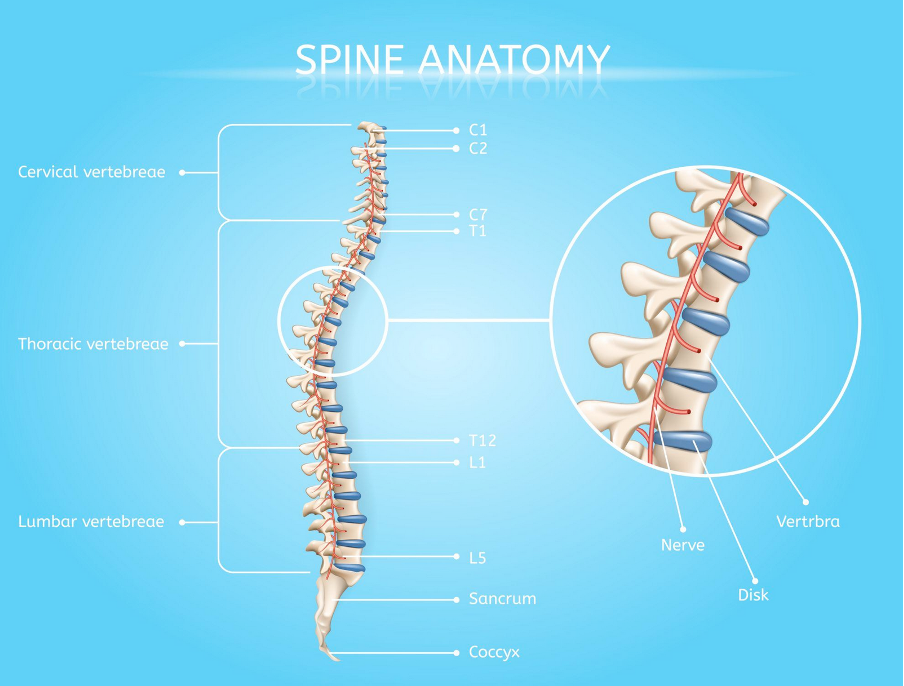
The spine contains 33 vertebrae divided into different sections. Between many vertebrae are intervertebral discs, which act as cushions and help absorb impact.
The spine is divided into five major regions:
- Cervical Spine
- Thoracic Spine
- Lumbar Spine
- Sacrum
- Coccyx
Each region has a unique role in movement and spinal stability.
Cervical Spine Anatomy
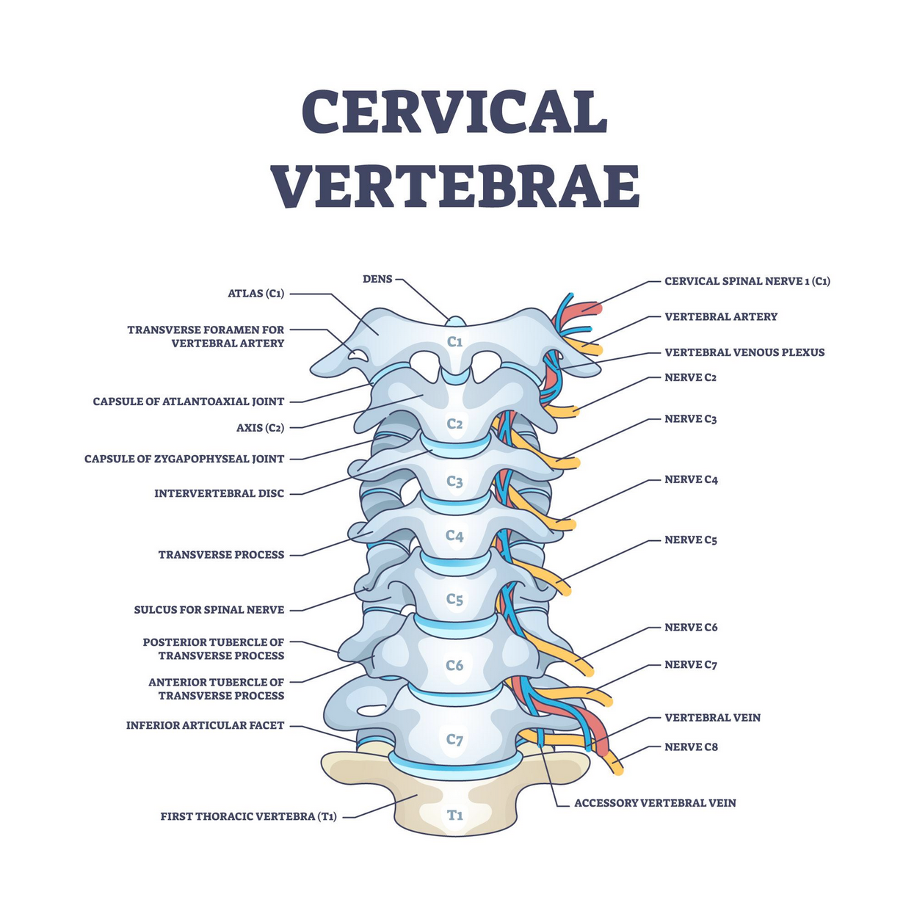
The cervical spine refers to the neck region of the spine. It consists of seven vertebrae labeled C1 through C7.
Main Functions of the Cervical Spine
- Supports the weight of the head
- Allows neck movement and flexibility
- Protects nerves traveling from the brain to the body
- Enables rotation, bending, and extension of the neck
The first two vertebrae, known as the atlas (C1) and axis (C2), are specially designed to allow head movement.
Common Cervical Spine Conditions
People frequently search for symptoms related to cervical spine problems because neck pain is extremely common. Some common conditions include:
- Herniated cervical discs
- Cervical stenosis
- Pinched nerves
- Degenerative disc disease
- Cervical arthritis
- Whiplash injuries
Symptoms of Cervical Spine Problems
- Neck pain
- Headaches
- Shoulder pain
- Arm numbness or tingling
- Weakness in the hands
- Reduced range of motion
If left untreated, severe cervical spine issues may affect nerve function and mobility.
Thoracic Spine Anatomy
The thoracic spine anatomy is the middle portion of the spine and consists of 12 vertebrae labeled T1 through T12.
This section connects to the rib cage, making it more stable and less flexible than the cervical and lumbar regions.
Main Functions of the Thoracic Spine
- Stabilizes the upper body
- Protects vital organs such as the heart and lungs
- Supports posture
- Assists with controlled movement
Because the thoracic spine is attached to the ribs, injuries in this region are less common compared to the neck and lower back.
Common Thoracic Spine Problems
Although thoracic spine issues are less common, they can still occur due to poor posture, aging, trauma, or spinal deformities.
Common conditions include:
- Thoracic disc herniation
- Kyphosis
- Compression fractures
- Scoliosis
- Muscle strain
Symptoms of Thoracic Spine Issues
- Mid-back pain
- Muscle stiffness
- Pain around the rib cage
- Postural imbalance
- Pain during twisting movements
Many people who work long hours at desks develop thoracic discomfort due to poor posture and muscle tension.
Lumbar Spine Anatomy (Lower Back)
The lumbar spine, commonly referred to as the lower back, consists of five vertebrae labeled L1 through L5.
This is one of the most important and commonly injured parts of the spine because it carries most of the body’s weight.
Main Functions of the Lumbar Spine
- Supports body weight
- Allows bending and twisting movements
- Absorbs shock during walking and lifting
- Protects nerves controlling the lower body
The lumbar spine experiences significant stress during daily activities, which makes it highly vulnerable to injuries and degeneration.
Common Lumbar Spine Conditions
Many online searches related to back pain are connected to lumbar spine problems. Common conditions include:
- Herniated lumbar discs
- Sciatica
- Spinal stenosis
- Degenerative disc disease
- Spondylolisthesis
- Facet joint arthritis
Symptoms of Lumbar Spine Problems
- Lower back pain
- Leg pain
- Numbness or tingling
- Muscle weakness
- Difficulty walking
- Pain while sitting or standing
Sciatica is one of the most common lumbar spine conditions and occurs when the sciatic nerve becomes compressed.
What Is the Sacrum?
The sacrum is a triangular bone located below the lumbar spine. It consists of five fused vertebrae and connects the spine to the pelvis.
Main Functions of the Sacrum
- Transfers body weight to the pelvis
- Stabilizes the spine
- Supports standing and walking
- Connects the spine to the hip bones
The sacrum plays a critical role in maintaining balance and supporting movement.
Sacroiliac (SI) Joint Problems
The sacrum connects to the pelvis through the sacroiliac joints. Dysfunction in these joints can cause significant pain.
Common symptoms include:
- Lower back pain
- Hip pain
- Pain while standing
- Pain radiating into the legs
SI joint dysfunction is often mistaken for lumbar spine problems because the symptoms can overlap.
What Is the Coccyx?
The coccyx, commonly called the tailbone, is the final segment of the spine. It is made up of small fused vertebrae located below the sacrum.
Main Functions of the Coccyx
- Supports sitting posture
- Provides attachment for muscles and ligaments
- Helps stabilize the body when seated
Common Coccyx Conditions
Tailbone pain, known as coccydynia, may occur due to:
- Falls or trauma
- Prolonged sitting
- Childbirth injuries
- Degenerative changes
Symptoms of Coccyx Pain
- Pain while sitting
- Tenderness near the tailbone
- Pain during movement
- Discomfort when transitioning from sitting to standing
Why Is Understanding Spine Anatomy Important?
Understanding spinal anatomy helps patients recognize symptoms early and seek proper treatment before conditions worsen.
Benefits of Learning About Spine Anatomy
- Better understanding of pain sources
- Improved posture and movement habits
- Earlier diagnosis of spinal conditions
- More informed treatment decisions
- Better communication with healthcare providers
Patients who understand their spine health are often more proactive about prevention and recovery.
Frequently Asked Questions About Spine Anatomy
Which Part of the Spine Causes Lower Back Pain?
The lumbar spine is the most common source of lower back pain because it supports much of the body’s weight and experiences constant movement and stress.
What Are the Signs of a Herniated Disc?
Common symptoms include:
- Back or neck pain
- Numbness
- Tingling
- Weakness
- Pain radiating into the arms or legs
Symptoms depend on the location of the affected disc.
Can Poor Posture Affect the Spine?
Yes. Poor posture places excess pressure on the spine, muscles, and discs. Over time, this may contribute to chronic pain, disc degeneration, and muscle imbalance.
When Should I See a Spine Specialist?
You should consult a spine specialist if you experience:
- Persistent back or neck pain
- Numbness or tingling
- Weakness
- Difficulty walking
- Pain interfering with daily activities
- Symptoms lasting several weeks
Early diagnosis can help prevent worsening conditions.
Advanced Spine Care With Dr. Alok Sharan
Modern spine care has evolved significantly, allowing patients to benefit from minimally invasive techniques and faster recovery times.
Dr. Alok Sharan at the Spine and Performance Institute specializes in advanced spinal procedures designed to reduce pain and improve quality of life. One of the innovative treatments he offers is Awake Spinal Fusion.
Unlike traditional spinal fusion surgery performed under general anesthesia, Awake Spinal Fusion uses local anesthesia and minimally invasive techniques. Patients remain awake during the procedure, which helps reduce surgical risks, minimize pain, shorten hospital stays, and support quicker recovery.
This advanced approach is especially beneficial for patients seeking safer and less invasive solutions for spinal conditions.
Conclusion
The spine is a remarkable structure responsible for supporting movement, protecting the nervous system, and maintaining overall body function. From the cervical spine in the neck to the coccyx at the base of the spine, each region plays a critical role in daily life.
Understanding spinal anatomy can help patients recognize symptoms, improve posture, prevent injuries, and seek timely treatment for spinal conditions.
If you are experiencing neck pain, mid-back pain, lower back pain, or nerve-related symptoms, consulting an experienced spine specialist can help you identify the root cause and explore personalized treatment options.


