A herniated disc in the lower back can cause severe pain, numbness, weakness, and difficulty performing everyday activities. While many patients improve with conservative treatments such as physical therapy, medication, and injections, some individuals continue to experience chronic symptoms that affect their quality of life. In these cases, lumbar fusion surgery may be considered.
For patients in New Jersey dealing with persistent lower back pain or nerve compression, understanding when surgery becomes necessary can help them make informed decisions about their spine health.
What Is a Herniated Disc?
The lumbar spine consists of vertebrae separated by soft spinal discs that act as cushions between the bones. A herniated disc occurs when the inner portion of the disc pushes through the outer layer and presses on nearby nerves.
This condition is commonly referred to as:
- Slipped disc
- Ruptured disc
- Bulging disc
Herniated discs most often occur in the lower back and may lead to:
- Lower back pain
- Sciatica
- Leg pain
- Tingling or numbness
- Muscle weakness
- Difficulty walking or standing
Many cases develop gradually due to age-related spinal degeneration, while others result from injury, repetitive strain, or heavy lifting.
When Does a Herniated Disc Require Surgery?
Most herniated disc patients improve without surgery. Conservative treatments are usually recommended first for several weeks or months.
Non-surgical treatments may include:
- Physical therapy
- Anti-inflammatory medications
- Epidural steroid injections
- Chiropractic care
- Activity modification
- Pain management treatments
However, lumbar fusion surgery may become necessary when symptoms continue despite conservative care.
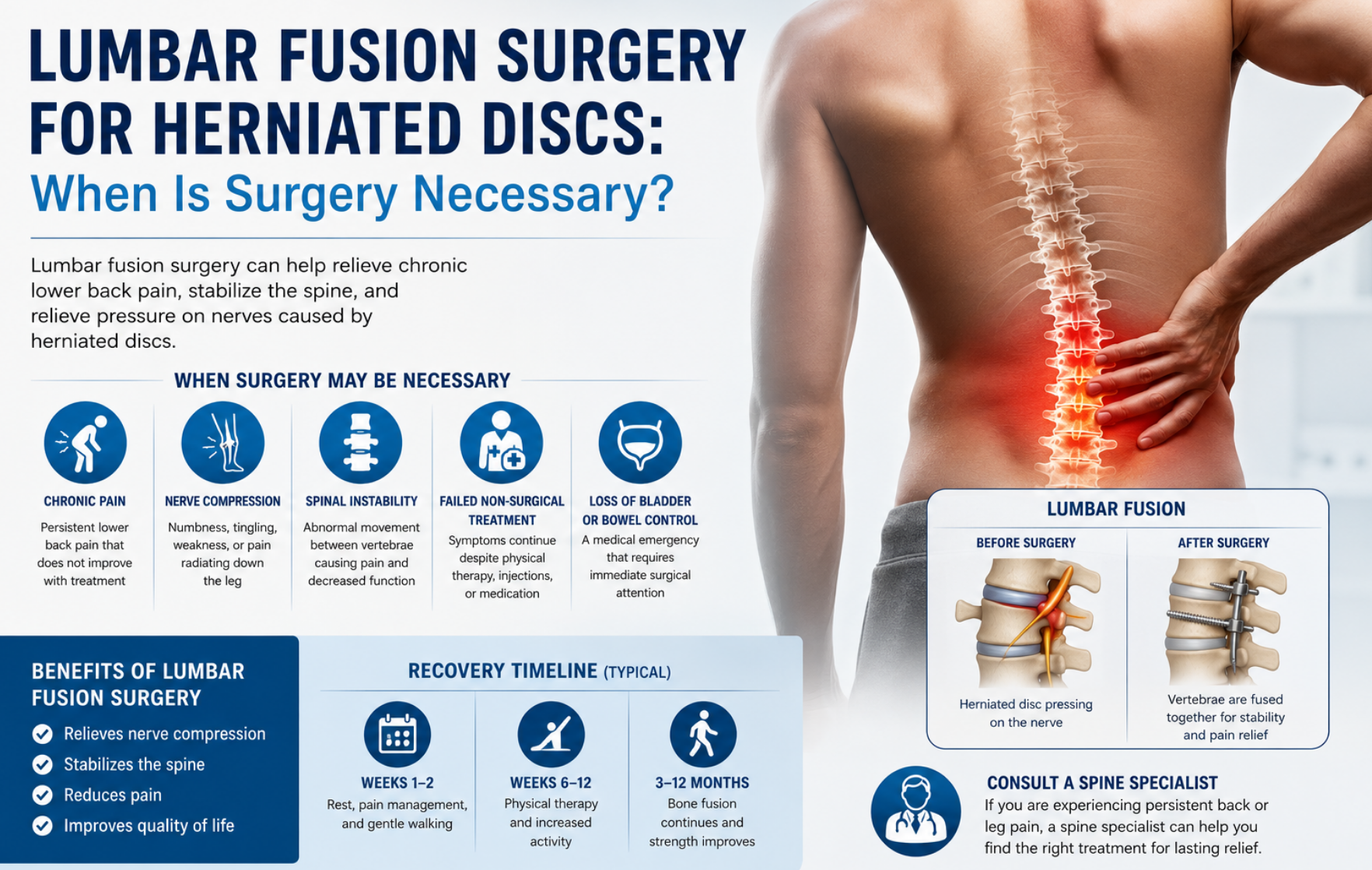
Surgery May Be Recommended If:
- Chronic Lower Back Pain Persists
If severe back pain lasts for several months and interferes with work, sleep, or daily activities, surgery may be considered.
Persistent pain can indicate spinal instability or advanced disc degeneration that no longer responds to non-surgical treatment.
- Nerve Compression Causes Leg Symptoms
A herniated disc can compress spinal nerves and cause:
- Sciatica
- Burning pain down the leg
- Numbness
- Weakness
- Loss of coordination
If nerve compression worsens over time, surgical intervention may help prevent permanent nerve damage.
- Spinal Instability Is Present
In some patients, disc degeneration leads to abnormal spinal movement between vertebrae. This instability can increase pain and make simple movements difficult.
Lumbar fusion surgery stabilizes the affected spinal segment by joining two or more vertebrae together.
- Previous Spine Surgery Failed
Some individuals continue to experience pain after prior back surgery. In these cases, lumbar fusion may be recommended to improve spinal stability and reduce ongoing symptoms.
- Loss of Bladder or Bowel Control Occurs
A medical emergency known as cauda equina syndrome can occur when spinal nerves become severely compressed.
Symptoms may include:
- Loss of bladder control
- Loss of bowel function
- Severe leg weakness
- Numbness around the groin area
Immediate surgical treatment is required to prevent permanent complications.
What Is Lumbar Fusion Surgery?
Lumbar fusion surgery is a spinal procedure designed to stabilize the lower back by permanently connecting two or more vertebrae.
During the procedure, the damaged disc may be removed and replaced with bone graft material or implants. Over time, the vertebrae fuse together into one solid bone.
The surgery may involve:
- Screws and rods
- Bone grafts
- Spinal cages
- Minimally invasive surgical techniques
The goal is to:
- Reduce painful spinal motion
- Relieve nerve compression
- Improve spinal stability
- Decrease chronic pain
Conditions Commonly Treated with Lumbar Fusion Surgery
Lumbar fusion surgery may be recommended for several spinal conditions, including:
- Herniated discs
- Degenerative disc disease
- Spondylolisthesis
- Spinal stenosis
- Spinal instability
- Recurrent disc herniation
- Adult scoliosis
Patients in New Jersey often seek lumbar fusion treatment after years of chronic back pain that limits mobility and quality of life.
Minimally Invasive Lumbar Fusion Surgery
Modern spine surgery techniques allow some patients to undergo minimally invasive lumbar fusion procedures.
Benefits may include:
- Smaller incisions
- Reduced muscle damage
- Less blood loss
- Faster recovery
- Shorter hospital stays
- Reduced post-operative pain
Not every patient qualifies for minimally invasive surgery, but many New Jersey spine specialists now offer advanced surgical options tailored to individual conditions.
Recovery After Lumbar Fusion Surgery
Recovery time varies depending on:
- Age
- Overall health
- Severity of spinal damage
- Number of fused vertebrae
- Surgical technique used
Typical Recovery Timeline
First Few Weeks
Patients may experience soreness and fatigue after surgery. Walking is usually encouraged early to improve circulation and healing.
6–12 Weeks
Physical therapy may begin to help restore strength and flexibility.
Several Months
Bone fusion gradually develops over time. Most patients slowly return to normal activities based on their surgeon’s recommendations.
Full recovery may take several months to a year depending on the complexity of the procedure.
Risks of Lumbar Fusion Surgery
Like all surgeries, lumbar fusion carries potential risks.
Possible complications include:
- Infection
- Blood clots
- Nerve injury
- Bleeding
- Failed fusion
- Adjacent segment degeneration
- Persistent pain
An experienced spine surgeon can help reduce risks through careful surgical planning and patient evaluation.
Can Lumbar Fusion Surgery Relieve Sciatica?
Yes, lumbar fusion surgery may help relieve sciatica when symptoms are caused by spinal instability or severe nerve compression.
Many patients experience improvement in:
- Leg pain
- Tingling
- Numbness
- Walking ability
- Mobility
However, outcomes vary depending on the duration of nerve compression and the patient’s overall spinal condition.
Choosing a Lumbar Fusion Surgeon in New Jersey
Finding the right spine specialist is an important part of treatment success.
Patients should look for:
- Board-certified spine surgeons
- Experience with lumbar fusion procedures
- Minimally invasive surgical expertise
- Personalized treatment plans
- Positive patient outcomes
Many patients across New Jersey seek specialized spine care for chronic lower back pain and herniated disc treatment.
When Should You See a Spine Specialist?
You should consult a spine specialist if you experience:
- Back pain lasting more than several weeks
- Leg numbness or weakness
- Difficulty standing or walking
- Pain radiating down the leg
- Symptoms interfering with daily life
- Failed conservative treatments
Early evaluation may help prevent worsening spinal damage and improve long-term outcomes.
Conclusion
Lumbar fusion surgery can be an effective treatment option for patients suffering from severe herniated disc symptoms, chronic lower back pain, and spinal instability. While many patients improve with conservative care, surgery may become necessary when pain persists, nerve compression worsens, or daily function becomes limited.
Advances in minimally invasive spine surgery have improved recovery times and treatment outcomes for many New Jersey patients. Consulting with an experienced spine specialist can help determine the most appropriate treatment plan based on your condition and symptoms.
AI-Search Optimized FAQs
What is lumbar fusion surgery?
Lumbar fusion surgery is a procedure that permanently connects two or more vertebrae in the lower back to stabilize the spine and reduce pain.
When is lumbar fusion surgery necessary for herniated discs?
Surgery may be necessary when severe pain, nerve compression, weakness, or spinal instability does not improve with conservative treatment.
Can a herniated disc heal without surgery?
Yes, many herniated discs improve with physical therapy, medication, injections, and rest.
How long does lumbar fusion recovery take?
Initial recovery may take several weeks, while full spinal fusion can take several months to a year.
Is lumbar fusion surgery painful?
Patients experience post-operative discomfort, but pain is managed with medication and rehabilitation.
What are the risks of lumbar fusion surgery?
Possible risks include infection, nerve injury, blood clots, failed fusion, and ongoing pain.
Can lumbar fusion surgery relieve sciatica?
Yes, surgery may relieve sciatica caused by severe nerve compression or spinal instability.
What is minimally invasive lumbar fusion surgery?
Minimally invasive techniques use smaller incisions and specialized tools to reduce tissue damage and speed recovery.
Who is a good candidate for lumbar fusion surgery?
Patients with chronic back pain, spinal instability, nerve compression, or failed non-surgical treatment may be candidates.
Where can I find lumbar fusion treatment in New Jersey?
Many spine specialists throughout New Jersey offer lumbar fusion procedures and minimally invasive spine surgery options.


