
Lumbar Laminectomy
A lumbar laminectomy is a surgical procedure used to relieve pressure on the spinal cord or nerves in the lower back. It involves removing part or all of the lamina, which is the back portion of a vertebra that covers the spinal canal.
Low back pain
Leg pain or sciatica
Numbness or weakness in the legs
Difficulty walking
By removing the lamina and any bone spurs or disc material compressing the nerves, a laminectomy helps create more space in the spinal canal, often leading to symptom relief.
It can be done as a standalone surgery or combined with other procedures like spinal fusion, depending on the stability of the spine.


Minimally invasive, effective treatments.
Frequently Asked Questions About Laminectomy and Discectomy
What is a laminectomy discectomy?
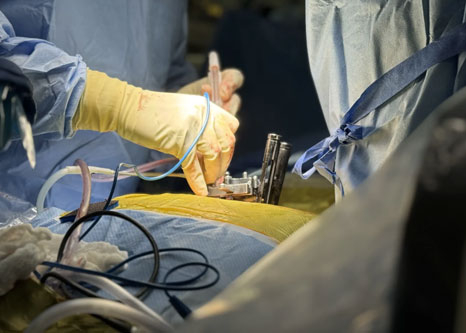
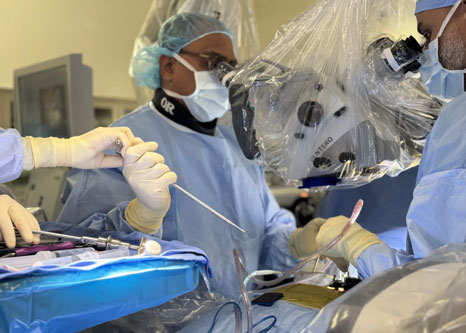
A laminectomy discectomy is a decompression surgery that relieves pressure on spinal nerves by removing two structures: the lamina (a portion of the vertebral bone forming the roof of the spinal canal) and herniated disc material that is compressing nerve roots. The laminectomy creates more space in the spinal canal, while the discectomy removes the protruding disc fragment pressing on the nerve. At Awake Spinal Fusion, Dr. Alok Sharan performs this procedure using minimally invasive techniques under regional anesthesia, requiring only a small incision and causing minimal disruption to surrounding muscles and tissues. This approach results in less postoperative pain, reduced blood loss, and faster recovery compared to traditional open surgery. Most patients experience immediate relief of leg pain and numbness following the procedure.
How long does recovery take after laminectomy discectomy?
Recovery from minimally invasive laminectomy discectomy performed under the awake spine technique is remarkably fast. Most patients at Awake Spinal Fusion go home the same day of surgery, walking independently within hours of the procedure. Pain from the surgical incision is typically mild and manageable with over-the-counter medications, as the awake spine approach significantly reduces opioid requirements. Return to light activities and desk work is generally possible within one to two weeks. More physically demanding activities can typically be resumed at four to six weeks, though this varies based on individual healing and the specific demands of each activity. Dr. Sharan provides detailed post-operative guidelines and schedules follow-up appointments to monitor recovery progress and guide patients through a graduated return to their normal activities.
What is the difference between a laminectomy and a discectomy?
A laminectomy and a discectomy are two distinct decompression procedures that are often performed together but address different structures. A laminectomy removes part or all of the lamina, the bony arch that forms the back wall of the spinal canal. This procedure widens the spinal canal to relieve pressure caused by spinal stenosis, where the canal has become narrowed. A discectomy removes herniated or protruding disc material that is pressing on a nerve root, relieving the pain, numbness, and weakness caused by nerve compression. When both procedures are performed together as a laminectomy discectomy, the surgeon removes both the bone and disc material to achieve comprehensive nerve decompression. Dr. Sharan determines the appropriate combination of procedures based on each patient's specific pathology as seen on MRI imaging.
Is a laminectomy a major surgery?
Traditionally, laminectomy was considered a major surgery requiring general anesthesia, large incisions, significant muscle dissection, and multi-day hospital stays. However, modern minimally invasive techniques have transformed this procedure. At Awake Spinal Fusion, Dr. Alok Sharan performs laminectomy through a small incision using tubular retractors that gently separate muscles rather than cutting them. Combined with regional anesthesia that allows the patient to remain awake, the procedure has become an outpatient surgery with same-day discharge for most patients. Blood loss is minimal, infection risk is reduced, and recovery time is dramatically shortened compared to the traditional open approach. While any spine surgery requires careful consideration and expertise, the minimally invasive awake approach has significantly reduced the invasiveness and recovery burden associated with laminectomy surgery.


